
 3 min read
Kosli gives your organization a complete picture of software delivery - every build, scan, deployment, and compliance event tracked. Until now that picture was most useful to the people managing governance.
However, developers shipping code had to ask someone else what versions of their code were running, how long it was taking to get to production, or what their deployment frequency was.
Repositories change that. The same data that powers your compliance layer now gives development teams a view organized around the questions they actually ask.
Developers think in repos. Now Kosli does too.
Development teams organize their work around repositories. That’s the unit that makes sense to them - not Flows or Trails, but the repo they commit to every day.
Build frequency, deployment frequency, lead time from build to deployment - these measure the last mile of your change management process. The longer that lead time, the more friction sits between a build passing all its checks and that build reaching production. And, if you’ve invested in automating governance, these numbers tell you whether it’s paying off.
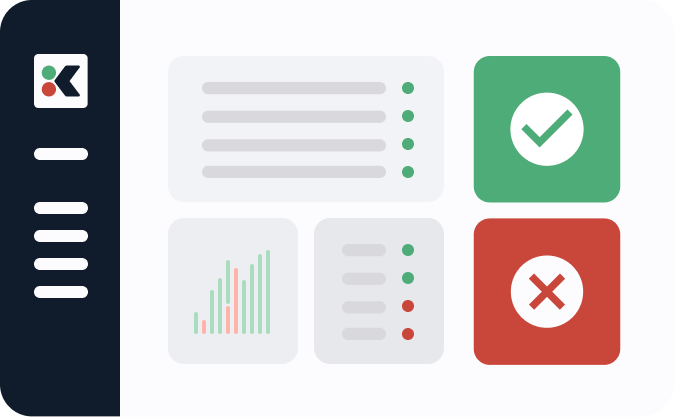
So, for each repository you’ve onboarded into Kosli, you’ll now see:
- Which artifacts are currently running in which environments
- Recent build frequency
- Deployment frequency per environment
- Lead time from build to deployment
New visibility. Zero new work.
You get this visibility as a byproduct of the governance platform you’ve already built. Kosli extracts repository information from the attestations you’re already providing - so there’s no additional instrumentation or pipeline steps required.
One thing to check: Kosli builds the repository view from attestations going forward, not from historical data. You’ll need CLI v2.11.35 or later to capture repo information. If your teams are on a recent version, you’re already done.
Surface repo data where developers already live
For teams using Backstage, Grafana, or an internal developer portal, the Repos API lets you surface this data where developers already work, without requiring them to log into Kosli directly. As an alternative, you can give application teams access to the Kosli UI - the repo page is designed to be self-explanatory to someone who’s never opened Kosli before.
Coming next - controls and service level reporting
With Repositories Kosli starts to mean something to the development teams doing the work, not just the teams tracking compliance. It provides a view onto existing data, organized around repositories rather than compliance trails.
Controls and service-level reporting are coming, but they only land well if the foundation is already shaped around how teams actually work. Repositories is that foundation.
Repositories is available now in beta to all Kosli customers.